What this covers
Flooring in the Wenatchee Valley and the towns around it.
Installation
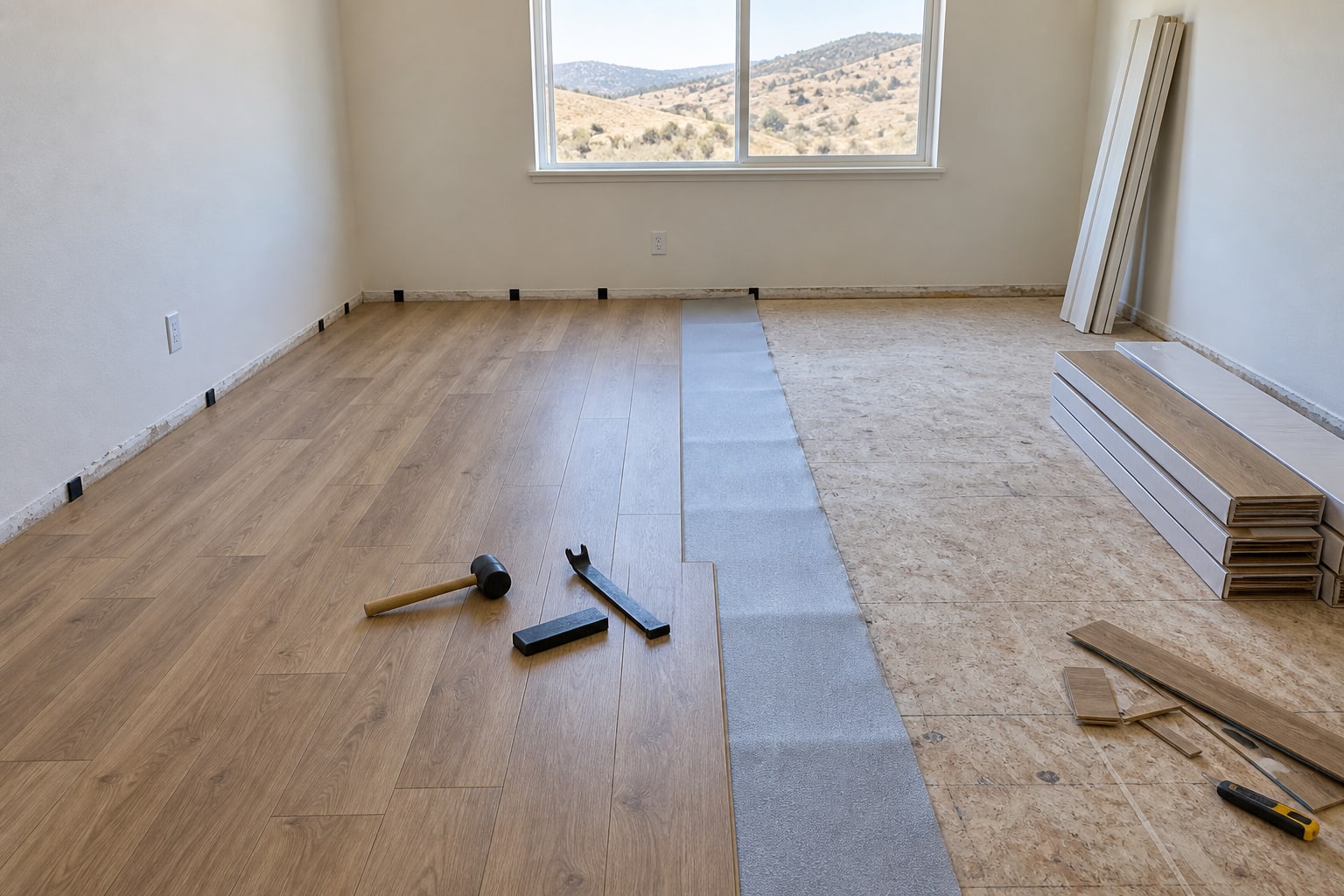
- Floating, glued and nailed flooring
- Tile and resilient flooring
Preparation & removal
- Existing-floor removal and disposal
- Subfloor flattening and repairs
What matters before the work
Picking the floor is where most people start, and it is the smallest decision in the job. Color, plank width, tile size: that part takes an afternoon. What sits under the floor decides how the finished surface looks and how long it holds.
This is high desert. The valley takes roughly eight to ten inches of precipitation in a year, summer afternoons in the nineties are routine, hundred degree stretches come most summers, and winters are cold. The spread between a hot afternoon and a cold night stays wide through most of the year.
Rigid core vinyl plank answers to temperature rather than humidity, which is its own problem in this climate. A floating floor in a south or west facing room with large glass gains length on a July afternoon and gives it back overnight.
Questions
Flooring questions
The practical questions worth settling before the work starts.
Can new flooring go over the old floor, or does the old have to come out?
It depends on height, flatness and what the existing floor is sitting on. A floating floor can go over one layer of well bonded sheet vinyl or tile if that surface is flat and solid. Carpet and pad come out.
Height is the part that gets overlooked.Each layer added raises the finished floor, and that shows up at the door bottoms, at transitions into other rooms, at the top stair, and under the appliances.
What actually decides the cost of a flooring job?
Material is the line most people price first, and it is rarely what moves the total. Removal and disposal move it, and disposal is charged by weight, so tile and thinset cost more to get rid of than carpet does. Subfloor repair moves it.
Layout matters as much as area.A large open room goes down fast. The same square footage split into bedrooms, hallways and closets means more cuts, more transitions and more baseboard.
Gaps open between my boards every winter and close up again in summer. Is something wrong?
Seasonal movement is normal in this climate and is worth telling apart from an installation problem. Wood and wood based flooring take on moisture in humid weather and give it back in dry weather.
A few things are worth a closer look: gaps that stay open through the whole year, one wide gap instead of many small ones, board edges standing higher than the centers, or seams peaking up off the subfloor.
The house is older. Is asbestos a concern when the old flooring comes up?
Resilient flooring from before the mid nineteen eighties can contain asbestos, usually in the backing of sheet vinyl, in nine by nine inch tile, or in the black cutback adhesive under either one. The intact floor is not the hazard.
The trade handles this by testing first.A small sample goes to a lab and the result decides the path. A clear result means ordinary demolition.