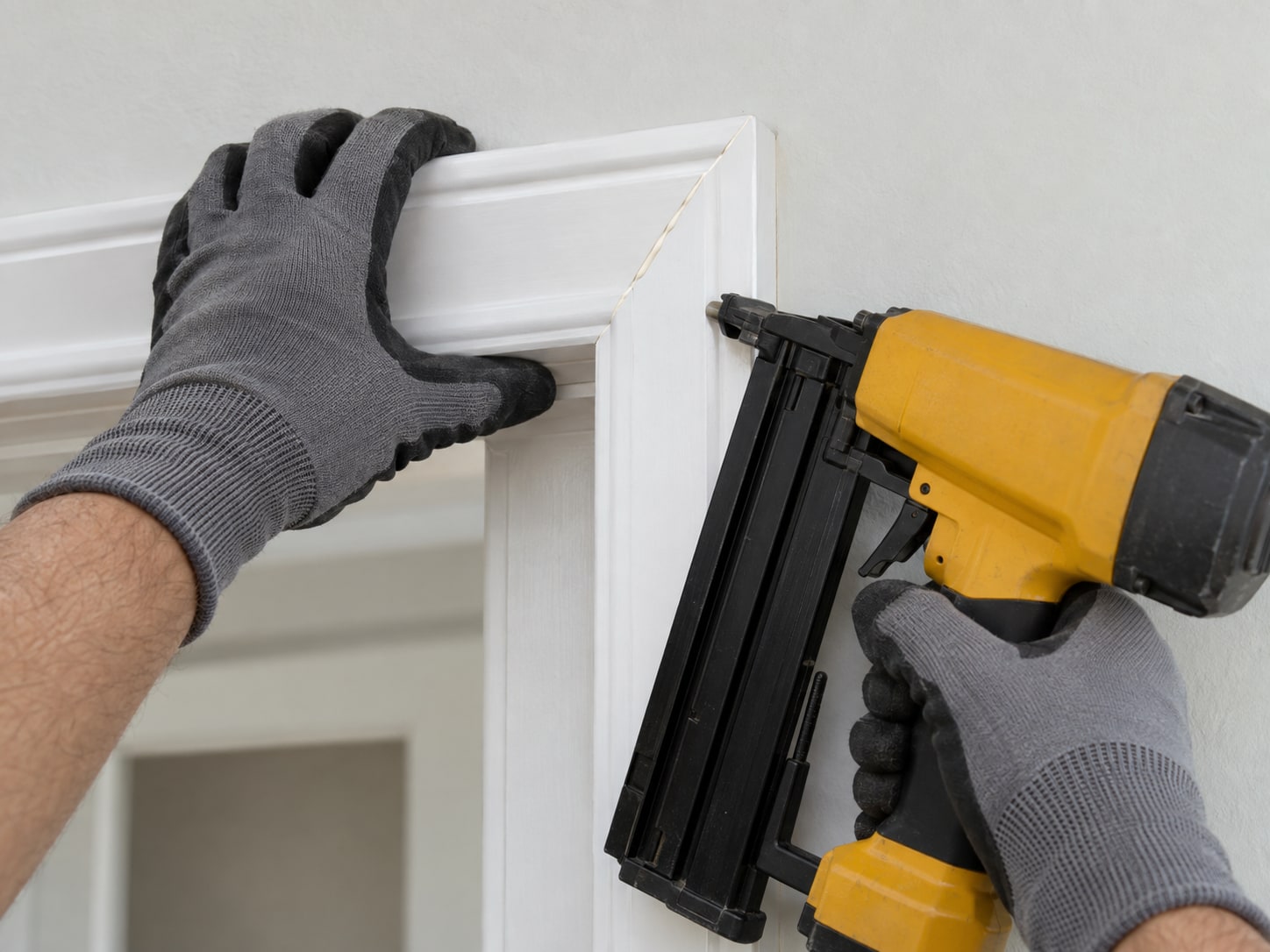
What this covers
Trim & finish carpentry in the Wenatchee Valley and the towns around it.
Interior trim
- Baseboard, casing and crown
- Window stools and aprons
Finish carpentry
- Built-up profiles and panel work
- Scribing, fitting and repairs
What matters before the work
Trim is the last carpentry to go into a house and the first thing anyone looks at. It gets judged from three feet away at eye level, which is a tighter standard than anything behind the drywall has to meet. What decides how it turns out is the house, not the moulding.
Wood moves here more than people expect. The Wenatchee Valley is high desert, roughly eight to ten inches of precipitation a year on the valley floor, with long hot summers, cold winters, and a wide gap between the afternoon high and the overnight low.
The trade has settled answers for that movement. Inside corners get coped instead of mitered, because a coped joint laps over itself and swallows a little shrinkage where a miter opens into a shadow. Outside miters get glued as well as pinned, so the corner moves as one piece rather than two.
Questions
Trim questions
The practical questions worth settling before the work starts.
Why do the miters on my door casing keep opening?
Two different causes look identical from the hallway. If the gap opens in the cold months and closes again by summer, that is the wood answering the indoor humidity swing, and the joint is doing what wood does in a climate this dry.
The cause decides the repair.Seasonal movement on painted trim gets filled and recaulked in the dry months, when the gap is at its widest, so the filler is squeezed as the wood takes moisture back instead of being pulled apart.
What decides what trim work costs?
Linear footage is the smallest part of it. Corners are where the hours go.
After that it is the finish and the conditions.Stain grade takes more hours than paint grade over the same run, because nothing gets caulked and the boards have to be sorted for color and grain. Nine and ten foot ceilings mean staging for crown.
Can the trim in an older house be matched?
Often, though rarely off a shelf. Profiles run in the early and mid twentieth century are mostly out of production, so the first thing to look at is whether the shape is one piece or several.
Species and age matter as much as shape.Old growth fir has tight straight grain that modern fir does not, so the same profile in new material reads differently beside it under stain. Paint closes that gap and stain shows it.
MDF or solid wood for baseboard and casing?
It depends on the room and the finish. MDF is dead flat, has no grain to telegraph through paint, holds its dimension through a dry winter better than solid wood, and costs less.
That draws the line fairly clearly.Painted trim in bedrooms, hallways and living rooms is normal MDF territory.